

Hello! I’m Max Casero, LCSW-S
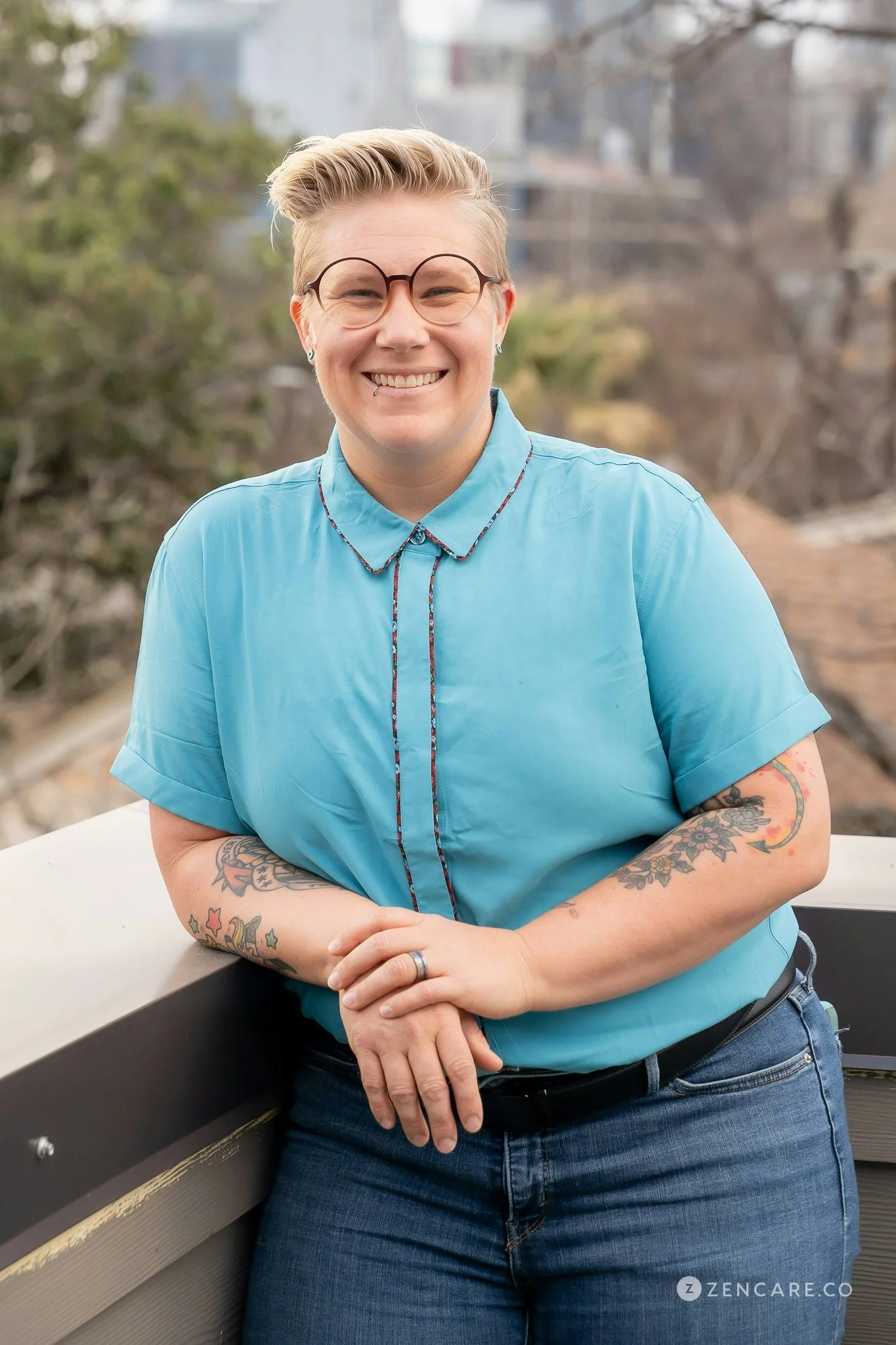
If you've found your way here, I'm guessing you've already done a lot of work.
You've probably read the books. You've listened to the podcasts. You've watched the TikToks, downloaded the planners, and maybe you've spent more nights than you'd care to admit scrolling Reddit because someone, somewhere, finally put words to something you've felt your entire life.
Maybe you've already been to therapy. Maybe you've been to several therapists.
You probably know what you're struggling with.
ADHD.
Anxiety.
Depression.
Trauma.
Burnout.
Relationships.
Executive functioning.
Parenting.
Maybe some or all of the above.
Putting a name to your experience is helpful, but it’s just the first step. The hard part isn't figuring out the label. The hard part is figuring out what that label actually means in your life.
Because two people can both have ADHD and have completely different experiences. Two people can both carry trauma and have completely different stories. Two people can both say they're anxious, but be protecting themselves from entirely different things in entirely different ways. Often, these same people are carrying multiple of these experiences simultaneously - same labels - entirely different and nuanced contexts.
That's the part I love: getting to learn you.
Hello! This is my story. In short, I think you’re magic.
-
Sometimes people ask me what I actually do as a therapist. Truthfully, it’s a strange job. But I think what drives me as a therapist is similar to what drives my love of reading fiction. I've always loved fiction because it lets me ask, 'Why did this character make that choice?' Therapy feels similar to me. Every person has a story, and once you understand the story, their decisions start making a lot more sense.
So mostly, my job is to be curious - and to model empathetic curiosity for you, too. The good news is that you don’t have to have the words yet because we spend a lot of time simply noticing. The language is something we’ll figure out together.
That probably sounds like a cop-out, but I mean it.
A lot of the people I work with have spent years feeling like they’re somehow speaking a different language than everyone else. If that’s you, you don’t have to translate perfectly before you walk through the door. I’m a queer person who’s spent a lifetime code-switching and navigating different worlds; we’ll figure it out together.
When someone comes to me and says, "I know exactly what I need to do. I just can't make myself do it,” most people immediately jump to solving the problem.
I don’t.
My first thought is almost always, "Let’s dig deeper."
So my curiosity leads to questions.
Help me understand why this task and not that one.
Help me understand what happens in your body when you think about doing it.
Help me understand what you've already tried.
Help me understand what worked, what didn't, and what almost worked.
Help me understand what your brain is trying to protect you from.
Honestly, you don’t have to know all of those answers when you walk in the door. Most people don’t. Sometimes you bring the pieces and I help organize them. Sometimes I notice a pattern you can’t see because you’ve been living inside it for years. That’s the beauty of therapy—it isn’t an interrogation. It’s a collaboration.
-
Once, we’ve dug deeper, and excavated more of the pieces, we can start assembling the puzzle. Because I've found that behavior almost always makes sense once we understand the context. Sometimes you bring the story. Sometimes I notice something that’s been hiding in plain sight. Most of the time, it’s both.
It’s a good thing I have ADHD and excellent pattern recognition, because I spend a lot of time noticing patterns that people mistake for personal failures.
That's probably my favorite part of this work.
Someone tells me they're lazy; maybe they're actually exhausted.
Someone tells me they're a quitter; maybe their brain works in seasons instead of straight lines.
Someone tells me they're bad at relationships; maybe nobody ever taught them what emotional safety actually feels like.
Someone tells me they're too emotional; maybe they've spent years ignoring feelings that were trying to tell them something important.
I want to be clear: I’m not here for an easy reframe and toxic positivity.
I will challenge you to think differently because you’ve sought me out to create change, and change is hard. But in that discomfort, you will also find a deeper understanding of yourself and your ability to build a life that fits.
As humans, our brains are incredibly good at turning patterns into character flaws because often, that keeps us safe; however, it also prevents us from living fully.
So as a therapist, I'm much more interested in asking why the pattern exists in the first place.
-
One of the biggest misconceptions I see in mental health is that people think they're supposed to figure themselves out in isolation.
Like if we just found the right planner, the right medication, the right self-help book, the right communication strategy, the right therapy influencer, or the right productivity hack, everything would finally click.
That's not how people work.
None of us exist in a vacuum.
We are shaped by our families. Our relationships. Our communities. Our identities. Our nervous systems. Our sleep. Our hormones. Our work. Our grief. The expectations other people place on us. The expectations we place on ourselves.
And yes...our tiny pocket computers that ding, buzz, and demand our attention every thirty seconds.
Context changes everything. It provides the color and shading in the line drawing of our lives.
However, context doesn't excuse behavior; it simply explains it. And once something makes sense, we can actually decide what we'd like to do differently.
-
People also ask me what kind of therapy I do.
The answer is...a lot of different kinds.
I've spent years studying psychodynamic therapy, CBT, DBT, ACT, attachment theory, Internal Family Systems, restorative practices, somatic approaches, motivational interviewing, and a handful of other models that have shaped how I think.
I genuinely value all of them. I approach each of these modalities as one side on a 20-sided die; often they explain similar concepts or are connected, and my job is to figure out which side, concepts, or language resonate best for you.
Over time, I've realized something extremely important: people don't come back because I used a particular intervention. They come back because they finally felt seen, understood, and validated. They come back because, somewhere in the middle of a conversation, something clicked.
Suddenly the thing they've spent twenty years criticizing themselves for starts making sense. I watch their breath change, their shoulders drop, and their demeanor shift.
I never get tired of watching self-compassion, understanding, and alignment happen in real time.
-
Here's something I don't think I've ever put on a website before.
I think people are kind of magic.
Not in the crystals-and-manifestation sense (although, I do love a good pocket rock). And if that's your thing, I'm certainly not going to yuck your yum.
What I mean is that human beings are endlessly fascinating. I think our brains are wildly creative. I think our nervous systems are unbelievably adaptive. I think every coping strategy developed for a reason, even if it isn't serving us anymore.
Without even realizing it, our brains are constantly adapting in an effort to keep us safe, connected, and alive. Our work together is building on that remarkable foundation—not starting from scratch—so you can move beyond surviving to thriving and begin building a life that actually fits.
How is that not magic?
-
If we end up working together, you'll probably notice that I ask a lot of questions.
Sometimes I'll challenge you.
Sometimes I'll teach you skills.
Sometimes I'll offer a perspective you haven't considered.
Sometimes I'll tell you you're avoiding something.
Sometimes I'll tell you to go take a nap because your nervous system has been running on fumes for three weeks and no amount of cognitive restructuring is going to fix sleep deprivation.
We'll probably laugh more than you expect.
We'll probably swear occasionally.
There will most certainly be metaphors.
And somewhere along the way, we'll build practical tools that actually fit your life and personality instead of trying to force you into someone else's.
Because I'm not particularly interested in helping you become the version of yourself that looks the most impressive on social media.
I'm much more interested in helping you build a life that feels sustainable when nobody else is watching.
-
I think we've been sold a really strange story about mental health.
We've been taught that if we're struggling, the problem must be us (thanks, individualism and capitalism).
Work harder.
Communicate better.
Buy another planner.
Download another app.
Optimize your morning routine.
Practice more self-care.
It’s always more, more, more. And always only on you to figure out how. What a lonely place to be.
Yes, admittedly, sometimes those solo interventions help. Sometimes they're exactly what you need.
But sometimes you're burned out because you've been surviving in systems that were never designed with you in mind (or were designed to keep you in your place).
Sometimes you're anxious because your brain learned that the world wasn't safe.
Sometimes you're grieving.
Sometimes you're carrying more than any one person should have to carry.
I don't think we do ourselves any favors by pretending those things don't matter or by trying to solve those problems alone.
Mental health is a community issue, so part of my job is providing connection so you can start the process. And another part of my job is teaching you how to connect beyond me.
-
So if there's one thing I hope you take away from this page, it's this:
I don't think you're broken.
I don't think your worth is measured in widgets or dollars or metrics.
I don't think healing means becoming the person you were before.
I don't think your diagnosis tells me everything I need to know about you.
I do think your story makes more sense than you probably realize.
I think curiosity changes people. After all, there’s research that suggests that curiosity leads to empathy, and couldn't we all do with a little more of that? Empathy combined with understanding creates options that previously felt impossible.
And I know, after more than a decade of experience, that therapy is one of the few places left where two people can sit down together, slow the world down for an hour, and genuinely ask, "Help me understand."
Because once we understand what's happening, we can start deciding—together—what comes next.
Take a tour of my unique telehealth work space - a 1968 Scottie Sportsman camper named Loretta.
Therapy & Coaching Services

$150-$250
Life is overwhelming, but you don’t have to navigate it alone. Whether you're struggling with anxiety, depression, trauma, or life transitions, therapy with Max offers a space to process, heal, and build the life you want—at your own pace, with real support.

$165-$250
Relationships are complex, and communication can be hard—especially when past wounds, neurodivergence, or big life stressors are in the mix. Couples therapy helps you and your partner navigate conflict, deepen connection, and create a relationship that works for both of you.
$165-$250
Family dynamics can be messy, but they don’t have to be impossible. Whether you're navigating neurodivergence, parenting struggles, or generational patterns, family therapy provides a space to untangle conflict, improve communication, and foster real understanding.

$150-$250
Sometimes, you don’t need ongoing therapy—you just need one powerful conversation to get unstuck. In a single session, we’ll tackle what’s weighing on you, find clarity, and map out tangible next steps.

$150-$250
ADHD isn’t just about focus—it’s about how you move through the world, manage emotions, and tackle the demands of daily life. Whether you’re looking for therapy to process the emotional toll of ADHD or coaching to build structure and momentum, we’ll work together to create strategies that actually work for you.
Price Variable
You’re a big-picture thinker with unstoppable ideas, but ADHD can make execution feel impossible. Coaching helps you harness your strengths, develop sustainable systems, and step into the kind of leadership that feels both effective and aligned.
Follow Prism on YouTube & Instagram
Contact Max
Interested in working together? Fill out some info and I will be in touch shortly. I can’t wait to connect!